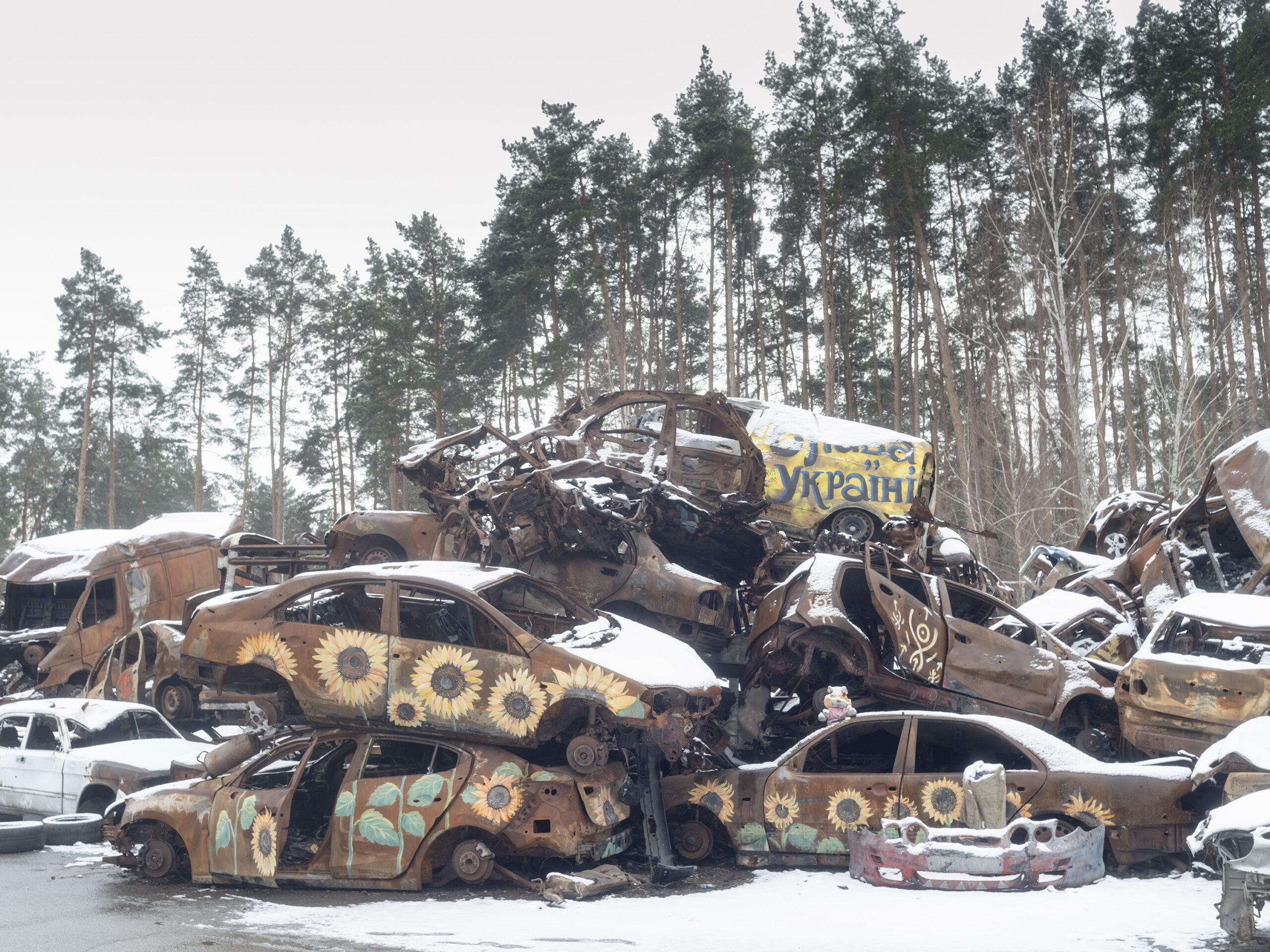
March 2024. Two years of war have torn Ukraine apart.
A few hundred kilometres from my home, the conflict is raging. I know it, I feel it. For a year, I have been photographing Ukrainian refugees, those who left everything behind, uprooted by this war.
A first month-long journey to Ukraine then becomes inevitable, almost a vital necessity. I feel the urgency to get closer to them, to understand what they have been through. This need is intertwined with my personal life: to better understand the history and experience of my Ukrainian partner, to embrace her roots, her culture, her past. To approach the country, the everyday lives of those I photograph, to resonate with what has been shattered by war and exile.
I know I will never truly be able to feel what they lived through during those dark days, but I feel the need to understand their roots, to touch what they have lost, to see what their lives were made of before the chaos.
In Ukraine, war is not only on television or in the daily alerts. It is in the landscapes we walk through, in the cities, the fields, the gutted houses. The word that comes to mind is desolation: these visible scars of war bear witness to shattered lives, destroyed destinies, erased futures. The chaos is not abstract; it is tangible.
Seeing war on television and seeing its consequences with your own eyes are two different realities. This is not the front line, not direct combat, but it is my first encounter with its cold reality. As a Frenchman, a European, a privileged person, I believed myself protected, sheltered from war. And yet it is there, in front of me, every day.
It then becomes impossible for me to remain silent. Bearing witness becomes necessary, both as an artist and as a man.
Desolation bears witness to all these scars: those left by the fighting, by the madness of men whose only aim was to destroy, erase, annihilate. The word resonates as a reminder: humanity is capable of the best, but often of the worst. Reason can disappear, giving way to the madness of destruction.